
It’s a cliche that’s true: you are the average of the five people you spend the most time with. We are always unconsciously modeling ourselves based on the people around us.
A silly made-up example: if you were raised in a culture that thinks that goats are evil, then you likely will hate goats. If you then move to a culture that worships goats, you will have a period of adjustment, but may over time develop a soft-spot for goats, too.

Moving to a different culture could mean travel. It could also mean changing your friend group, religious community, or job. If your friends are not very adventurous, finding more adventurous friends will likely make you more adventurous. If your religious community is not very accepting, finding an accepting community will likely make you more accepting too.
I’m writing these words now from Thailand, a country that loves fish sauce.
This was my brain before coming to Thailand:

My “fish sauce” neuron was mapped to the part of my brain that creates bad feelings. This was because my first impression of fish sauce was that it smelled like rotten fish.
Now, after repeated exposure to fish sauce as one note in delicious food that everyone around me enjoys, my brain is changing. Though the process is still a work in progress, my brain is starting to look like this:
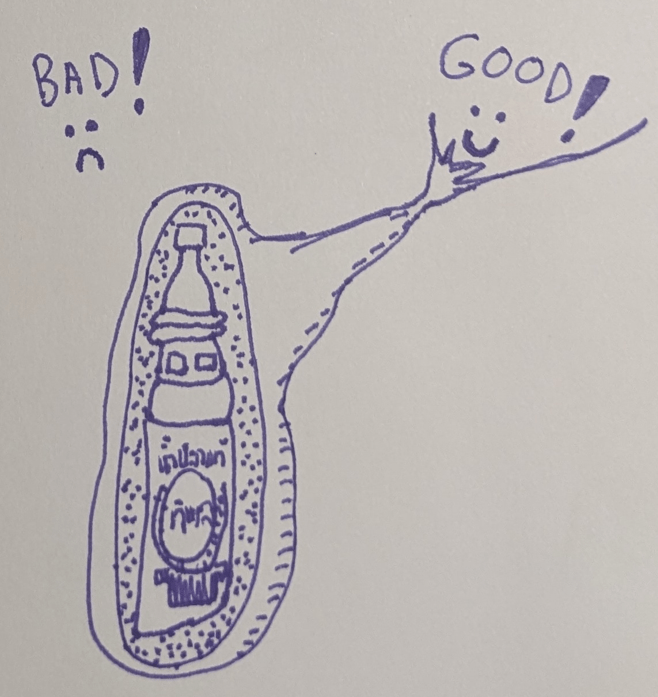
The fish sauce neuron is getting mapped to good feelings.
People’s brains have innumerable associations like this, and many of these are culturally programmed.
For example, I went to a religious Jewish school that taught me the eating pork and bowing to idols is sinful. In Thailand, eating pork and bowing to gold Buddha statues is the norm. The past 1.5 weeks, I’ve been surrounded by Buddha-bowing pork eaters and notice that they aren’t having any major life problems because of these practices. As with fish sauce, so with bowing to Buddhas and eating pork. Rewiring is happening.

When I told my girlfriend Api the above examples, she remarked that for her, leaving Thailand made her realize that being dark-skinned is not bad (Thailand has a culture of colorism where being white is seen as attractive and being darker-skinned isn’t).
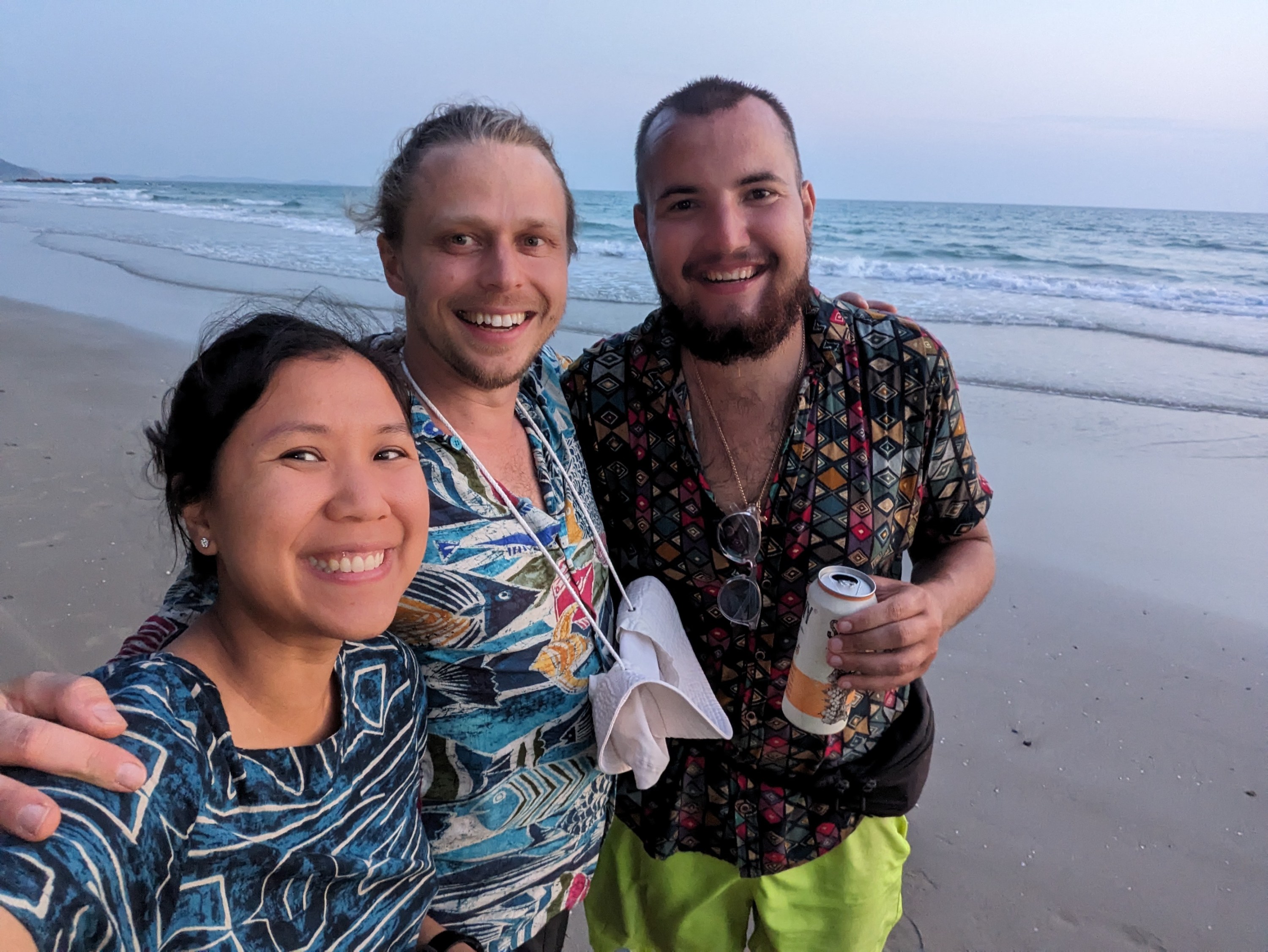
This evening, Api and I met a guy named Michael who is biking around the world. Michael said that the experience is making him more open to life.
What does being open to life mean?
I think one thing that it means having fewer rigid cultural associations. Not believing, for example, that pork or bowing to Buddhas or dark skin is bad just because your culture told you so.
This doesn’t mean not having any values. It just means having fewer culturally-programmed values and more authentic internal ones.
I recently read a piece of writing by Matthew Strother, a guy who went to my college who passed away recently from early-onset colon cancer. I was struck by these words:
As I was sitting in the specialist’s office sharing a box of tissues with my partner, Berta, something quite beautiful happened: it suddenly seemed crystal-clear to me that all my usual anxieties and worries about my life – my concerns over what I was going to be and do – were more or less bullshit; that what really mattered was to love and be loved.
Matthew Strother
Which of our values are core, and which are, in the words of Matthew Strother, “more or less bullshit?”
Travel to new cultures is one tool for finding out. Travel helps to strip away the bullshit and cultivate openness to life. I’m grateful for the opportunity to be here, in Thailand, right now.
 danscreativeoulet