
When I was a kid, I dreaded “becoming an adult.” I saw the adults around me as conformist and boring, and I vowed to myself that I’d never become one of them. In college, I had a sense of dread that the process of “adultification” was happening to many of my peers. I didn’t want to be adultified.
In high school, I loved engaging in silly antics with my peers. During my freshman year of college, I was suddenly surrounded by people who were serious. They read newspapers with coffee over their dorm breakfasts. Adultification is happening too fast! I thought.
Yet, now that I’m 38, I see that my 18-year-old view of being “an adult” was quite limited. At 18, I thought that being an adult meant:
- being boring, stale, conformist, unimaginative, uncreative
- having a house in the suburbs
- caring about material things like fancy cars, making lots of money, and prestige/power
- doing “adult things” like reading the newspaper every morning, tucking in your shirt, working in an office
Over the past 20 years, I’ve updated my view of what “being an adult” means. I now think that being an adult has nothing to do with conformity or boringness. I know plenty of creative, non-conformist adults. Rather than having to do with external behaviors, like reading the newspaper or drinking coffee, I currently see “being an adult” as a trifecta of internal qualities:
- responsibility
- accountability and integrity
- vision and action
Let me explain each of these…
Responsibility
Everything can be taken from a man but one thing: the last of the human freedoms—to choose one’s attitude in any given set of circumstances, to choose one’s own way.
— Viktor Frankl, Man’s Search for Meaning
My definition of responsibility is the ability to learn from the choices I’ve made in the past, in order to make better choices in the future.
I currently have a sunburn. This was because yesterday, I talked with my friend on the phone for an hour without a shirt, in the mid-day sun.
I can look back upon yesterday and see the choices I made: I chose to text my friend and tell her I was available to talk. When she called, I chose to pick up the phone. I chose to walk outside and have the conversation with her while shirtless. I chose to talk for a long time. I chose not to keep sunscreen around.
The opposite of taking responsibility is the victim mindset. While in this mindset, I’m blind to the choices I made that contributed to my sunburn. In the victim mindset, I’d see that my friend called me during the mid-day sun and that I did my best to stay in the shade during the phone conversation but got burned nonetheless. Paying attention to only these things puts my attention outside the choices that I made that contributed to my problem of sunburn.
The victim mindset can feel good for my ego because I can continue thinking that I’m 100% good. I can avoid seeing that I made choices that contributed to my problem. I can blame the sun for burning me, or my friend for luring me outside for a long phone call, and continue to think that it’s all the sun’s / my friend’s fault.
Yet the victim mindset also saps me of the power to learn, to make changes, and to get different outcomes in the future. If I blamed the sun and my friend, then I wouldn’t see that change was as simple as saying to my friend: “Can I call you back?” Then going outside finding a reliably shady place from which to converse.
The past year, I’ve done a set of journal prompts a number of times to help me take more responsibility in my life. These are:
- Describe your problem
- What are the choices you made (thoughts, behaviors) that have contributed to this problem?
- Do you want to make different choices in the future?
- Which new problems will arise from these new choices? Are these better / more meaningful problems?
- What have I learned from this problem?
Source: The subtle art of not giving a f*ck journal.
Accountability and Integrity
For me, accountability and integrity are all about agreements. Accountability means keeping agreements with others. Integrity means keeping agreements with myself.
For example, the past several weeks, I’ve been working on being on-time to work. I have an agreement with my men’s group that if I’m late to work by more than 5 minutes, I’ll text the group. I am in a relative position of power at work, and have been able to “get away” with being somewhat late on a consistent basis. But being late is not a good practice. As an employee, there is an unspoken agreement of punctuality, and I don’t want to be out of accountability with this just because I can “get away with it.” So I’m proactively working on changing.
Integrity is a lot harder to keep, because there may not be external repercussions for breaking with integrity. In fact, the world may reward your for doing so. For example, I might have an internal value of being healthy, and if I get sunburn, I’m out of integrity. But as an adult, there will be no outside person who is mad at me if I get a sunburn.
Or let’s say that I think it’s more ethical to be a vegan or vegetarian. The world, by and large, won’t care whether I eat meat or not. In many cases, the only person who will care about the choice of my diet is myself.
I think that the poem The Guy in the Glass is about integrity. Other people may (or may not) let us know when we’re out of accountability. Our soul will let us know when we’re out of integrity.
Vision and action
Another crucial part of being an adult is having a vision, and taking action towards that vision. When I was in college, undecided on my direction in life, I wrote this poem:
Ode to the Unambitious
       The arrow of your life is not locked, yet
       Thoughts within your mind still freely swim
       The key to make you speed has not been turned, yet
       You look up at the tall plants as a seed
       You have not been pressure-packed and shipped, yet
       There is no single place you want to be
       Wishes that stream out from you have not been capped, yet
       There is no need for practicality
       You stand above the helpless souls
       Who kick their way to some small goal
       My friend, you watch the arrow sway
       And delight at the directions
While the undifferentiated state is beautiful, it’s also not healthy to stay there your whole life. Being an adult means picking a vision, and taking action to make that vision a reality.
There’s a show called “Crazy Ex-Girlfriend” which features a character called Heather who is a perpetual student. She intentionally doesn’t finish her undergraduate degrees because if she did, she’d have to become a defined thing.
In the poem above, I called this being “pressure packed and shipped.” There’s a certain pain to this cutting-off of possibilities. By becoming one thing, you don’t become a million other potential things.
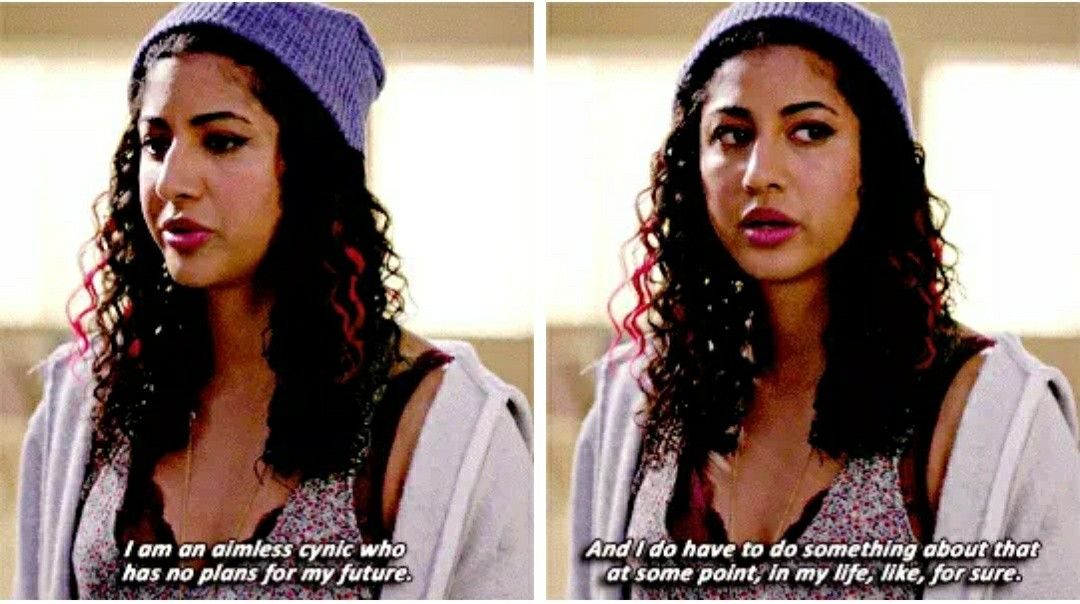
In a phone conversation yesterday, my brother expressed to me the desire to me to have an orchard. I was excited to hear about his vision. Yet vision is just the first step. The next step is taking action. This could mean volunteering on an orchard, or planting a tree, or looking at land, or something else.
I volunteer on a farm with someone who is planning to establish an avocado orchard on the Big Island of Hawaii. She’s been living the farm lifestyle for years and now she’s at the point of looking at land. She’s got both vision and action.
Vision without action is stagnation. By analogy, think of being lost in the woods. To find your way home, you need to have a vision of where home is. But the vision alone is not enough. To get home, you need to actually walk.
Vision is a useful thing, because it gives us the direction in which to take our next step. It’s often good for our vision to be somewhat flexible because the place we end up is often quite different from our initial mental picture.
As with all posts on this blog, I’ve composed it mainly as a reminder to myself and to clarify my thinking. “Being an adult” is not something that just happens with age. Rather, it’s a conscious choice to pursue certain values. And “being an adult” is not a binary state, but rather a matter of degree. I can be more or less adult, in various moments of my life. I’m striving, these days, to be more of an adult.
I never thought I’d say that.
P.S. I was reflecting, with a friend, on what “being a kid” means to me, in the good sense. I think that for me it means keeping wonder and play alive. We can be adults and still wonder and play, though this by no means easy to do for me. Bob Dylan sang, “The man in me will hide sometimes to keep from being seen, but that’s just because he doesn’t want to turn into some machine.” A better lyric would be: “The child in me…”
This question, of how to be an adult while keeping wonder and play alive, is one that I’m keeping at the forefront of my mind. It’s the reason I started The Wonder Project, and why I clown.
 danscreativeoulet