
A year ago, I dressed up as The Clown of Interbeing and went to the Festival of Yes, a magical 2-day gathering in the woods of the Pacific Northwest.
Not going to the Festival this year was a difficult decision for me. So, I was super-excited to get in my inbox this conversation of my friends Ethan and Alex riffing on the subject of Yes Philosophy. I took notes!
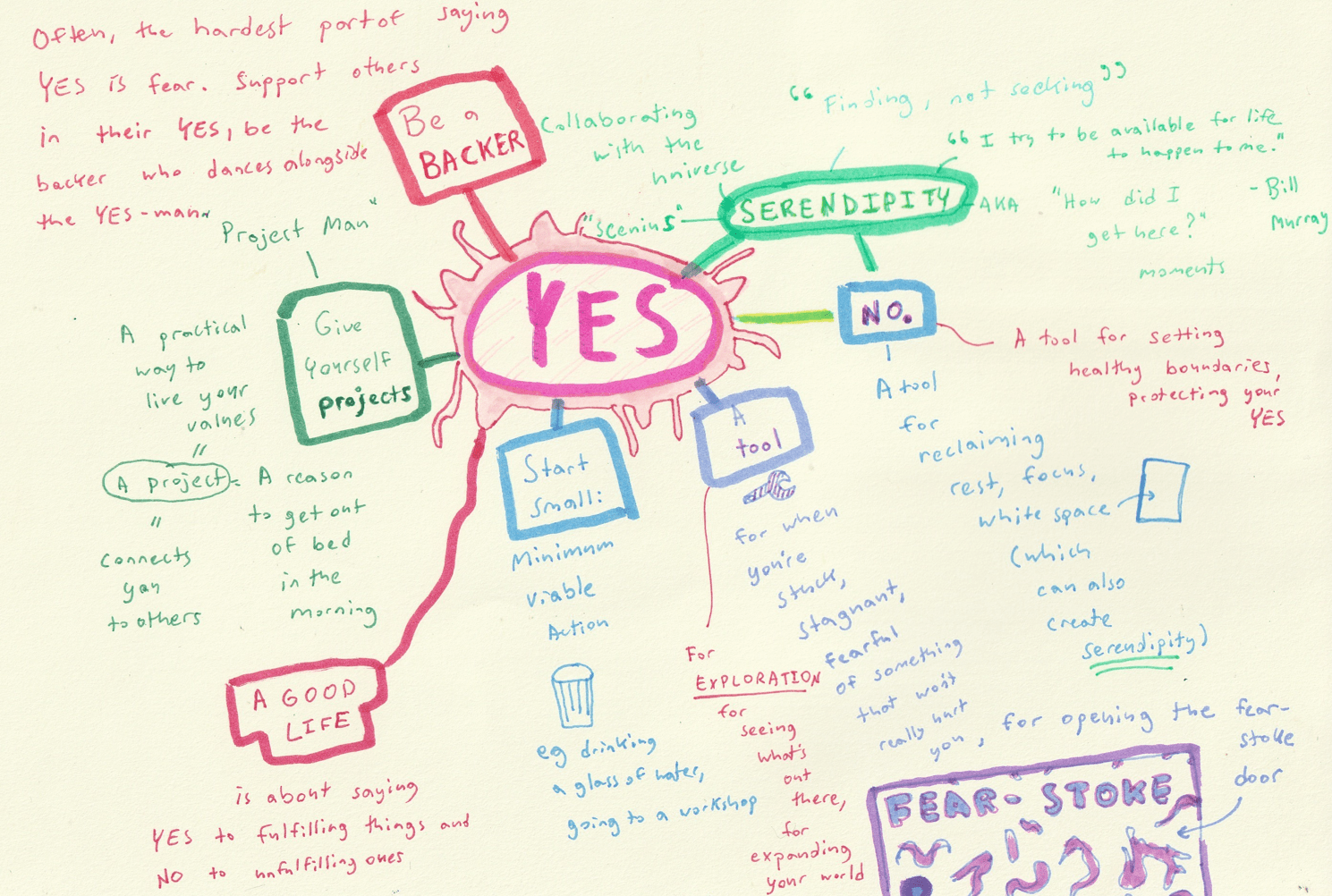
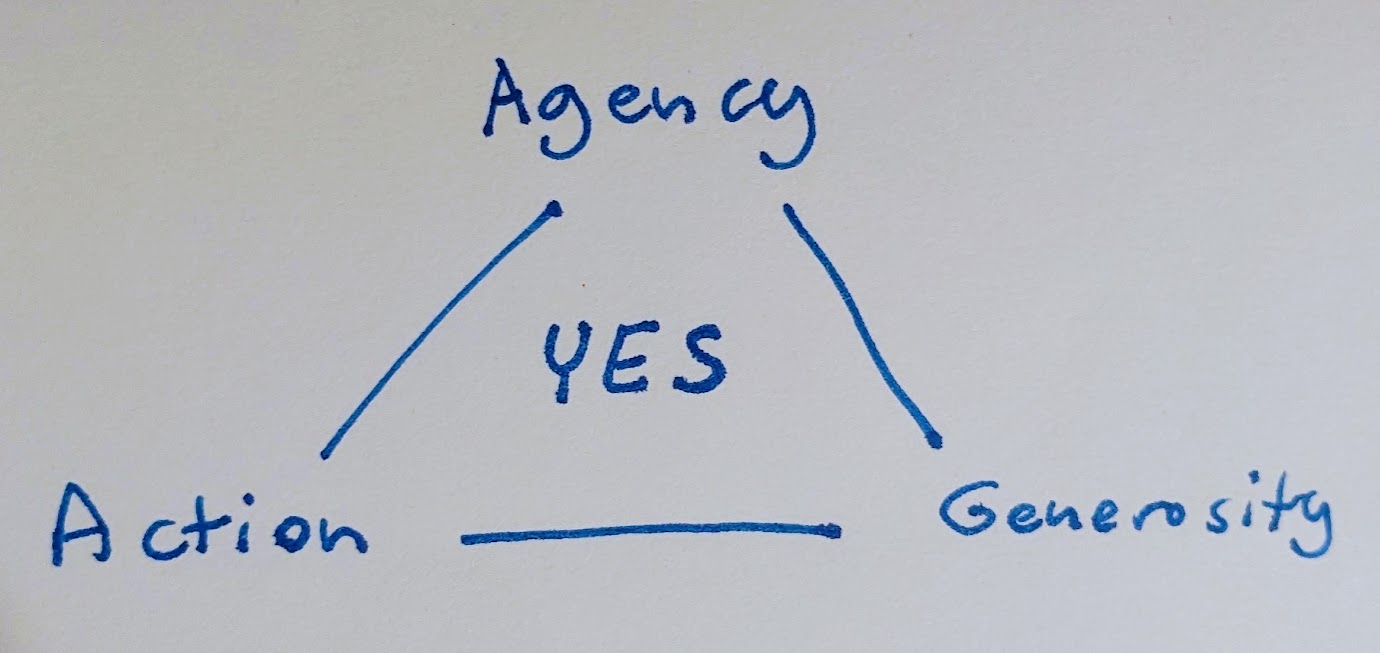
The mind-map above is a lot to look at. To keep it simple, I’ll boil the “Yes Philosophy” down into three core values:
- Agency
- Action
- Generosity
Let me give a concrete example of how I used the YES philosophy today.
Today was a rough day. Work was super busy and cognitively demanding. By the end of the day, I felt drained and angry. I found myself snapping at everything that moved.
In the interview, Alex talks about his practice of choosing every morning to drink a glass of water. This ritual isn’t about the water, but about agency. By choosing to do this every morning, Alex is effectively telling himself: “I have lots of choices in my life.” We all have lots of choices. We can choose to say Yes or No to lots of things, every single day. Embodying the Yes philosophy doesn’t have to look like booking a trip to Antarctica. It can look like saying Yes to a glass of water or making your bed or going to a workshop.
So I decided to exercise agency this evening: I decided to go for a run. I decided to move. To get out of my funk. I would take action. I strapped on my shoes and walked out the front door!
But, after 10 minutes, I realized that I didn’t have it in me to run. I said No to running, and Yes to walking. This was me utilizing agency again, my freedom of choice.
The Yes philosophy is not about rigidly saying Yes. It’s about saying Yes to values that I want and adjusting course as needed. My key value in getting out of the house was to recharge my batteries. And walking felt more restful than running.
After walking for a while, I lay down on the grass and looked at the sky, read an old blog post of mine on my phone. Then I walked towards a plaza.
In the plaza I discovered a specialty shop that sold knives, weapons, and sexy lingerie.
Then I saw it. My destination. The holy grail:
Baskin Robbins.
I got myself an ice cream cone:
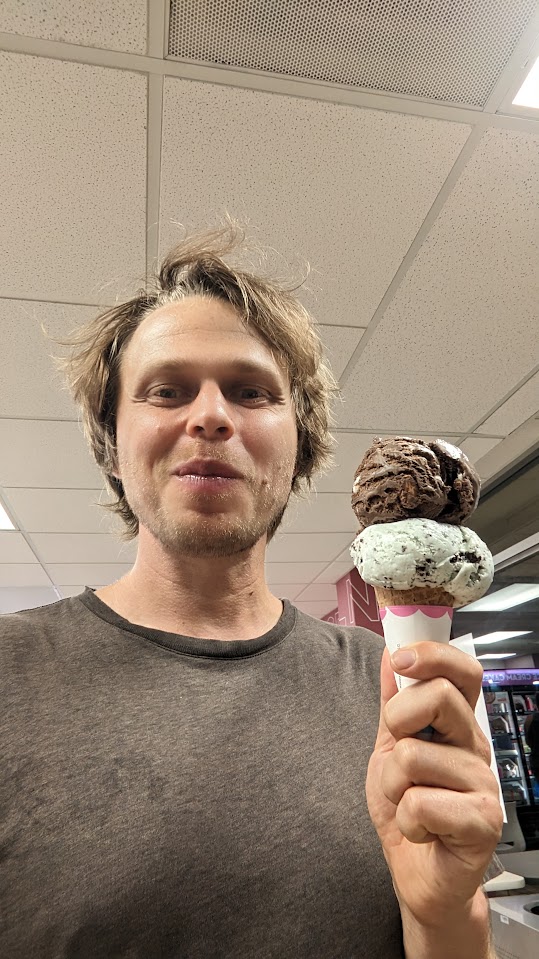
“In life, you never know what you’re gonna get,” says Alex in the interview. The Yes philosophy can lead to success or failure. Today, it lead to ice cream. Which was exactly what I needed.
This is where the story of my whimsical YES walk ends. But there is one missing value I didn’t touch on: generosity.
We all are on our journeys of growth in this life. Being a backer means supporting others in taking risks, in pushing through fear to do things that make them come alive. Being a backer could mean giving someone encouraging words, money, a high five, or anything else.
I went to a fancy event dressed as a clown the other day, and was quite fearful. What would people think of the weirdo dressed as a clown at the gala dinner with a business-attire dress code?
At the very start of the evening, a guy asked to take a picture with me in the photo booth. He wore my spare clown nose and put on my hat. He was a true backer, a generous soul.
The Yes philosophy is about WE as much as it’s about ME. By being a backer, this guy helped me walk through the fear-stoke door. For the rest of that night, I had a blast. I danced freely. I connected with tons of people on an authentic level through clowning. But it all started with that guy who gave me that first signal of support.
Agency, action, and generosity. Three simple values that form the Philosophy of YES.
 danscreativeoulet
Yes! I love the run, walk, ice cream story. You started out exercising great agency, but it didn’t feel aligned and good, so you pivoted to a walk, which is also a high agency move to reset yourself after a long day, that also felt good and aligned. Agency that is “good and aligned” seems the sweet spot to me.
But the sweetest spot is walking to get ice cream. During the pandemic, my brother, dad, and I would sometimes walk seven miles round trip from our house in suburban Phoenix to get a $1 ice cream cone from McDonalds. It made the day every time.
Thanks for this awesome comment! The ice cream at the end of the day, after a long walk and with community: a sundowner of a sweeter sort!
The ice cream story also brings to mind an interesting dance between finding and seeking, serendipity and goal-setting. I can go on an open-ended run that turns into a walk that turns into a visit to a weapon/lingerie shop that turns into a surprise ice cream outing. This is finding/serendipity. Or I can plan to go on a long ass walk with family and an ice cream reward at the end. Both are totally great colors of paint on this canvas of life!
I was just thinking about the need to balance openness with identity. A good analogy (that my rabbi came up with) is having furniture on casters all the time. This is too much openness, too much yes. Openness needs to be balanced with certain core values. But it’s good to not have the furniture be stuck in one position for your whole life. As Alex says, yes is a tool to introduce movement. To be picked up and used for a certain period of time, and then put down again. Yes gives us both ice cream and weapons/lingerie shops. Agency and discernment help us choose wisely/align.